Project Summary
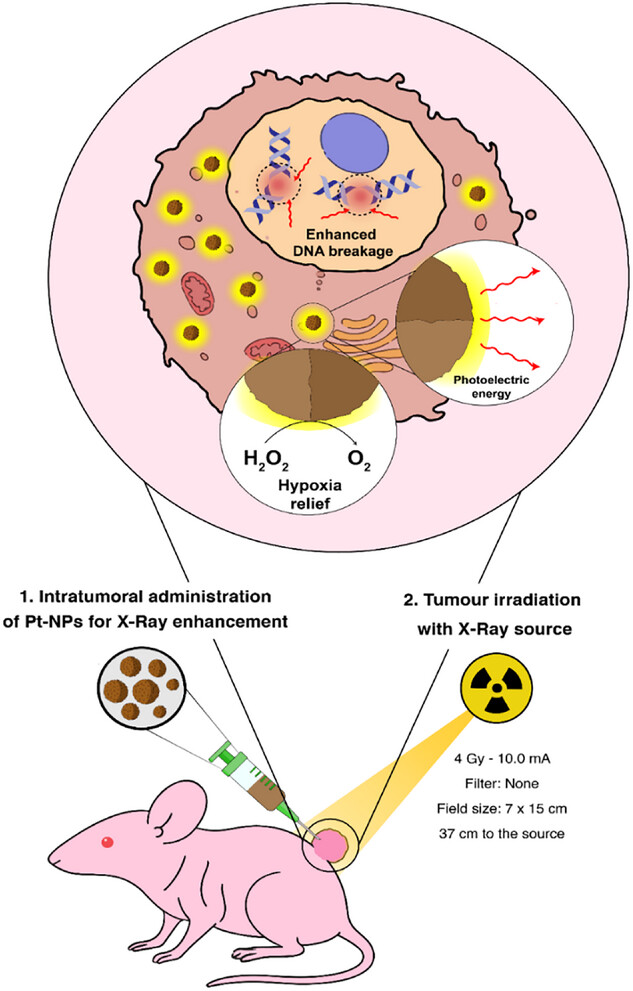
The latest project of my Ph.D. thesis was published in the Advanced Functional Materials journal (IF = 19.0), which resulted from a fruitful research stay at the Endocrine Tumors research group in the Instituto de Salud Carlos III. In particular, this work explored the usage of ultra-small (~2 nm), platinum-based nanoparticles for the enhancement of radiation therapy against tumoral cells. Overal, this end-to-end projects comprises from the full synthesis and physico-chemial characterization of the nanomaterial (mainly performed by my lab colleague) to the biological of the material in cell culture, and ultimately the injection of the nanomaterial in two different animal models. In this case, the series of experiments that I conducted allowed us to gain the following insights: - Our nanoparticle presented a catalytic activity, by which it was able to generate oxygen from hydrogen peroxide, which is known as catalase activity. This is interesting by itslef, since intratumoral hypoxia usually hinders the success of several antitumoral therapies. - Our nanomaterial showed mild effects by itself, presenting an almost negligible cytotoxic effect in tumoral and non-tumoral cell lines. Nevertheless, when our nanomaterial was combined with the application of X-Ray, the cytotoxic effect of this therapy in tumoral cells was enhanced, mediated by an increased damage in the DNA. - Laboratory animals that were locally and sistemically treated with an injection of our nanoparticles, in combination with two irradiations with X-Ray, showed reducted tumoral growth rate and a remarkable reduction of the tumoral
Graphical abstract